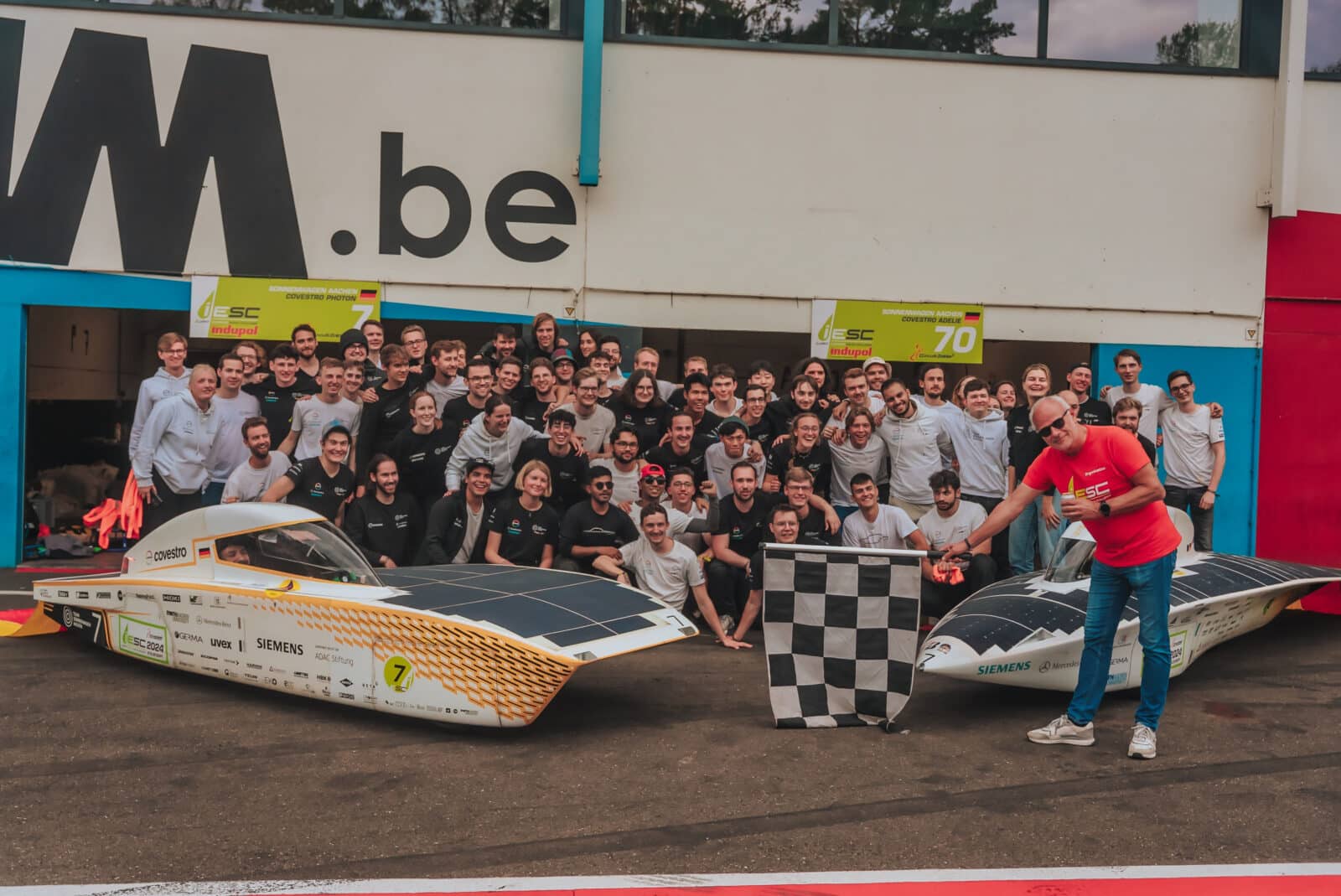
“What if we organised a 24-hour race… but with solar cars?” It sounded like an ambitious idea. Today, it has become reality. As founder and president of the iLumen European Solar Challenge, Frans-Joseph Joosten has seen that simple question grow into the world’s only 24-hour solar car race.

From a small initiative to an international event
The story of the iESC began during an annual sustainability event organised by Rotary Club Genk-Staelen. At the time, Belgium was gaining attention in the world of solar racing, and Frans-Joseph (FJ) saw an opportunity to introduce the public to this innovative technology.
Instead of inviting just one solar car, he contacted several international teams. Before long, four teams from Belgium, the Netherlands, France and Germany had committed to taking part.
The enthusiasm around that very first edition proved there was potential for something much bigger.
After a second successful event, FJ and a small team founded a dedicated non-profit organisation and moved the race to Circuit Zolder. It was there that the idea of a 24-hour solar race was born, a concept that would eventually become the unique identity of the iESC.
More than just a race
Today, the iESC is the second-largest solar car event in the world after the Bridgestone World Solar Challenge in Australia. But according to FJ, the race has always been about more than competition.
“It’s a place where innovation comes to life.”
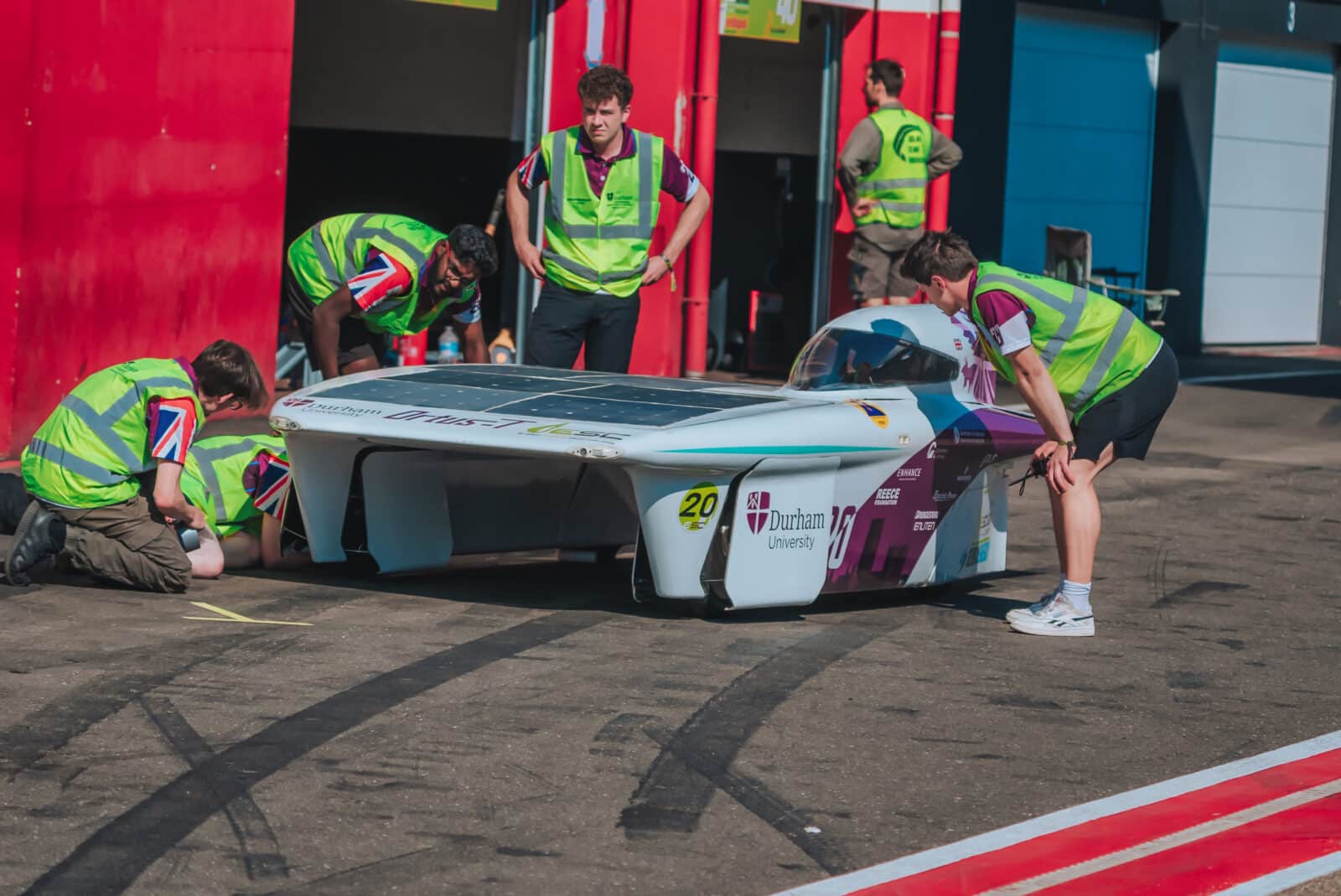
Unlike many technology events, visitors don’t walk through exhibition halls looking at static displays. They experience the action up close. They see students working in the pit lane, driver changes, strategic decisions, and engineering under pressure. It offers a behind-the-scenes look at the future of sustainable mobility.
For young visitors especially, the event serves as a living STEM platform, showing what engineering, teamwork and innovation can achieve.
Innovation on and off the track
According to FJ, the strongest teams aren’t always the fastest. What really stands out is their creativity.
Teams continuously search for smarter, lighter and more efficient solutions. Many of those innovations eventually find their way into today’s electric vehicles. Interesting to know: every two years, the competing teams start completely from scratch. Their solar cars are newly designed, engineered and built specifically for the race.
Building a solar car takes months of dedication. Teams of more than twenty students often pause their studies for a year to design, build and test every component before arriving at Circuit Zolder.
A unique community
Despite the competitive nature of the event, cooperation remains one of the defining characteristics of solar racing.
Frans-Joseph has seen teams help each other solve technical problems, search together for spare parts, and even encourage the organisation to let another team join the race after overcoming major setbacks.
“Everyone wants to win,” he says, “but everyone also wants to see every team make it onto the track.”
That sense of respect and collaboration is something he believes makes the iESC truly unique.
Looking ahead
Although the iESC has already grown into an internationally recognised event, Frans-Joseph believes the journey is far from over.
His ambition is clear: continue growing, welcome even more international teams and keep inspiring the next generation of engineers.
After all, what started with one simple question has become a global showcase for innovation, teamwork and the future of sustainable mobility.